
When it comes to cleaning your home’s exterior, one choice matters more than any other: soft washing vs pressure washing. They sound similar, but using the wrong one can strip paint, crack shingles or leave stains behind. The first uses low pressure and specialized cleaning solutions, while the second relies on high-force water. Knowing which method fits which surface is the difference between a safe, lasting clean and expensive damage. This guide breaks down both so you can choose the right one for your New Jersey property.
Table of Contents
What Is Soft Washing?
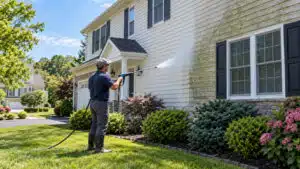
Soft washing is a cleaning method that uses low water pressure combined with specialized, biodegradable solutions to remove dirt, mold, algae and organic growth. Instead of blasting a surface with force, it lets the products do the work, breaking down grime at the source. The result is a deep clean that reaches below the surface and lasts longer, because it kills the mold and algae rather than just spraying them off.
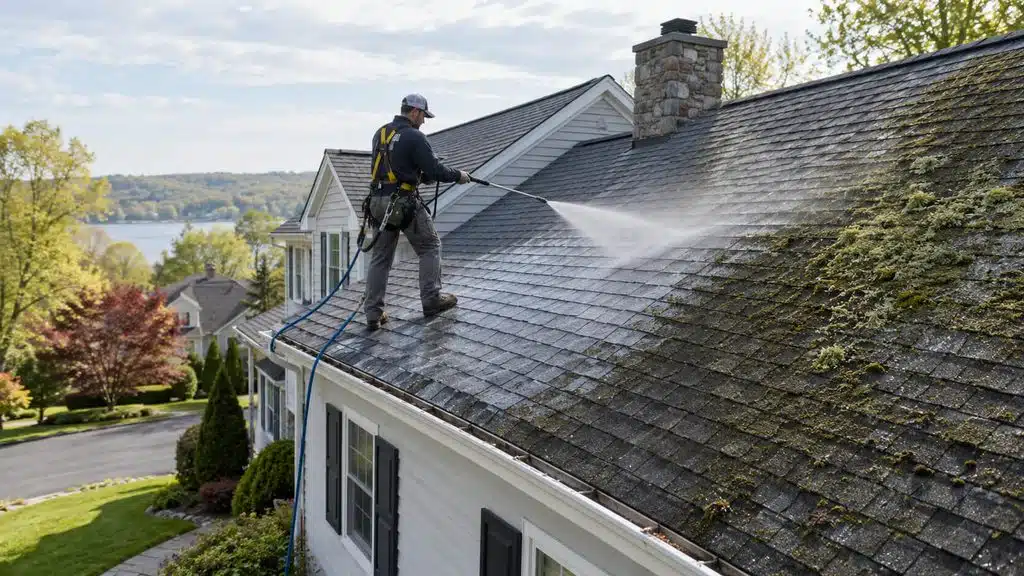
This gentle approach is what makes soft washing ideal for surfaces that high pressure can damage — like roofs, painted siding, stucco, wood and delicate materials. Soft washing removes years of buildup while protecting what’s underneath.
What Is Pressure Washing?
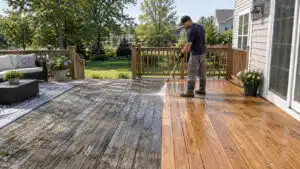
Pressure washing, sometimes called power washing, uses high-pressure water to physically blast away dirt, grime, mud and stains. In most cases there are no strong chemicals involved — the force of the water alone does the cleaning. This makes it fast and effective for tough, durable surfaces.
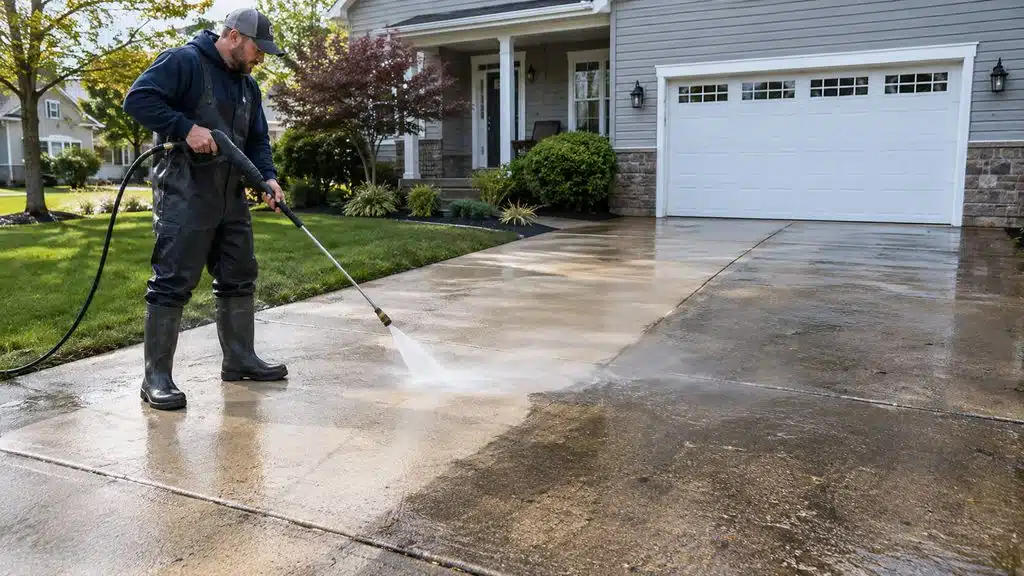
Pressure washing works best on hard materials that can handle it: concrete driveways, sidewalks, brick, stone patios and steps. On these, pressure washing lifts stubborn stains and buildup that gentler methods might not remove.
Soft Washing vs Pressure Washing: The Key Differences
The main difference in soft washing vs pressure washing comes down to pressure and cleaning solutions. Soft washing uses low pressure and specialized products; pressure washing uses high pressure and mostly water. That single distinction determines which surfaces each method can safely clean.
Pressure level: The soft method uses gentle, low pressure. The high-force method uses strong water.
Cleaning power: One relies on solutions to break down grime; the other relies on water force.
Best surfaces: The gentle option suits roofs, siding and delicate materials. The forceful option suits concrete, brick and stone.
How long it lasts: Killing mold and algae at the root makes results last longer, while surface grime removed by force can return faster.
Risk of damage: The gentle method is low-risk on the right surfaces; strong force can damage delicate materials if misused.
Which Method Does Your Home Need?
Most properties actually need both, applied to the right areas. Your roof and siding call for the gentle approach of roof cleaning, while your driveway, walkway and patio can handle the power of pressure washing. The problem is that using the wrong one on the wrong surface is exactly how expensive damage happens.
Not sure which your property needs? A quick assessment from an expert takes the guesswork out. Request a free estimate and we’ll tell you exactly which method each surface calls for — no obligation.
Why Using the Wrong Method Causes Damage
Using high pressure on a delicate surface is one of the most common and costly mistakes in exterior cleaning. Aimed at a roof, it can crack shingles, strip away protective granules and force water underneath the roofing. On painted siding or wood, it can peel paint, gouge the material and drive water behind walls where it causes hidden rot.
The gentle method avoids all of that by letting cleaning solutions do the work at low pressure. According to the U.S. Environmental Protection Agency, using the correct methods and solutions also helps protect surrounding soil and water from runoff. Matching the technique to the surface protects both your property and the environment around it.
Should You DIY or Hire a Professional?
The biggest risk with DIY exterior cleaning is not knowing which method a surface needs — or owning only one machine and using it on everything. That’s how roofs get damaged and siding gets stripped. Professionals bring both approaches, read each surface correctly, and apply the right pressure and solutions safely.
For hard surfaces like a driveway, a careful DIY job can work. But for roofs, siding and anything delicate, professional experience protects you from mistakes that cost far more than the cleaning itself.
The Right Method for Every Surface
There’s no single winner in soft washing vs pressure washing — the best choice always depends on the surface. Pressure washing benefits durable materials like concrete and brick, while soft washing gives roofs and siding the gentle care they need.
That’s exactly how we approach every property across New Jersey: the right method, the right pressure, and the right products for each surface — never a one-size-fits-all blast that risks your home.
Frequently Asked Questions
What is the difference between soft washing and pressure washing?
One uses low pressure and specialized cleaning solutions, while the other uses high-force water. The gentle method suits delicate surfaces like roofs and siding; the forceful one suits hard surfaces like concrete.
Is soft washing better than pressure washing?
Neither is better overall — it depends on the surface. The gentle method is better for roofs and siding; the forceful one is better for concrete and brick.
Can I pressure wash my roof?
No. High pressure can crack shingles and strip protective granules. Roofs should always be cleaned with the gentle, low-pressure method.
Does the gentle method last longer?
Usually, yes. Because it kills mold and algae at the root, results tend to last longer than force-only cleaning.
Which method is safer for my home?
The gentle approach is safer for delicate surfaces, while strong force is safe on hard, durable materials.
Get a Free Exterior Cleaning Estimate in New Jersey
Still unsure whether your property needs soft washing, pressure washing, or both? Let the experts decide the safe way. At Brothers Cleaners, we clean homes and businesses across New Jersey using the right method for every surface — protecting your property while delivering a lasting clean. Contact us today for a free, no-obligation estimate and get the correct cleaning for every part of your home.