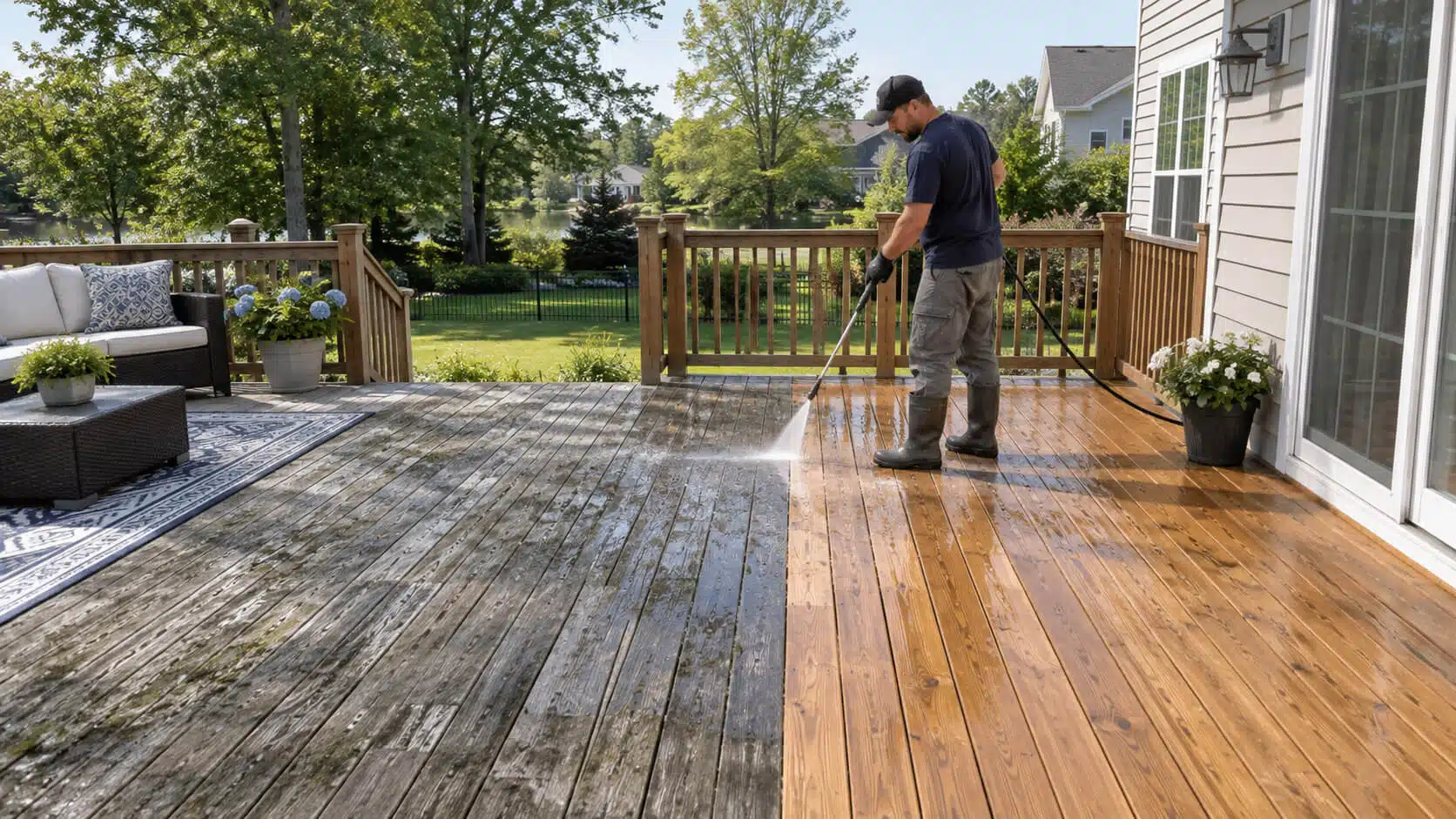
A clean deck is the heart of any backyard — but left unwashed, wood turns gray, grows slippery with algae, and slowly rots. Deck cleaning is what keeps your outdoor space safe, attractive and lasting for years. Done correctly, it lifts away grime, mold and weathering without harming the wood; done wrong, too much pressure can splinter and gouge the boards. Here’s how to clean your deck the right way, what to avoid, and when it’s smarter to bring in a professional.
The short version
Clean a deck by clearing it, sweeping, applying a wood-safe cleaner, scrubbing along the grain and rinsing with low pressure — never full-power pressure, which splinters the wood. In New Jersey, do it on a dry spring day, and seal the deck once it’s fully dry to make the clean last.
Table of Contents
Why Deck Cleaning Matters
A deck faces sun, rain, snow and constant foot traffic, so it takes more abuse than almost any surface around your home. Regular deck cleaning does more than improve looks.
Prevents rot: Removing trapped moisture, mold and mildew protects the wood from decay.
Improves safety: Algae and mildew make boards dangerously slippery when wet.
Extends its life: Clean, maintained wood lasts far longer before needing repair or replacement.
Restores appearance: Washing lifts away the gray weathering and brings the wood back to life.
Preps for sealing: A clean deck is essential before staining or sealing.
When Is the Best Time to Clean a Deck?
In New Jersey, the ideal time for deck cleaning is spring or early summer, once the cold has passed and before you start using the deck heavily. Cleaning in spring clears off the mold, mildew and debris that built up over winter, leaving the deck ready for the outdoor season.
Early fall is a good second option, preparing the wood before winter sets in. The key is to clean on a dry, mild day so the deck can fully dry afterward — especially important if you plan to stain or seal it once it’s clean.

How to Clean a Deck Step by Step
Cleaning a deck properly is straightforward when you follow the right sequence and avoid harsh pressure.
Clear the deck
Remove furniture, planters and grills so you can reach the whole surface.
Sweep thoroughly
Clear leaves and debris, especially from the gaps between boards.
Apply a deck cleaner
Use a cleaner suited to your wood or composite and let it break down mold and grime.
Scrub gently
Work the cleaner in with a stiff brush, following the grain of the wood.
Rinse carefully
Rinse with low pressure — high pressure can splinter and gouge the wood.
Let it dry fully
Allow the deck to dry completely before sealing, staining or moving furniture back.
The Pressure Washing Mistake That Ruins Decks
The most common deck cleaning mistake is reaching for a pressure washer on full power. Wood is soft, and high pressure easily splinters boards, gouges the surface and leaves permanent marks that no amount of sanding fully fixes. Composite decking can be damaged too.
The one mistake that permanently ruins a deck
- Don’t blast soft wood with full-power pressure — it splinters and gouges the boards for good.
- Do use low, controlled pressure — held at a distance and kept constantly moving.
If pressure is used at all, it must be low and controlled — and the safe amount depends on your decking. Understanding the difference between soft washing vs pressure washing helps you avoid costly damage.
| Decking type | Safe approach | Max pressure |
|---|---|---|
| Pressure-treated pine | Cleaner + brush, low-pressure rinse along the grain | ~500–600 PSI |
| Cedar & redwood (soft) | Gentle soft wash, scrub by hand, minimal spray | ~500 PSI or less |
| Hardwood (ipe, mahogany) | Cleaner + scrub, brief low passes kept moving | ~600–800 PSI |
| Composite & PVC | Soap, water and a soft brush — no aggressive spray | Low only, per maker |
Because it’s easy to cause lasting damage, many homeowners prefer a professional power washing service that knows exactly how much pressure each deck can take. You can request a free estimate anytime — no obligation.

Should You Seal Your Deck After Cleaning?
Cleaning and sealing go hand in hand. Once your deck is clean and fully dry, applying a sealer or stain protects the wood from moisture, UV damage and future mold growth — making your cleaning last much longer.
The U.S. Environmental Protection Agency notes that choosing low-toxicity wood finishes is a safer option for households and the surrounding environment. Sealing every couple of years, right after a thorough cleaning, is the single best way to extend the life of a wooden deck and keep it looking great.
DIY Deck Cleaning vs Hiring a Professional
Light deck cleaning is a manageable DIY job — sweeping, applying cleaner and scrubbing takes time but isn’t complicated. The risk comes with pressure washing and heavily weathered decks, where the wrong technique can permanently damage the wood.
A professional brings the right cleaners for your specific decking, controls pressure precisely, and can handle deep grime, stubborn mold and large decks efficiently. For a badly weathered deck, or one you plan to stain afterward, professional cleaning often delivers a better, longer-lasting result than DIY.
Keep Your Deck Looking Its Best
Regular deck cleaning is the simplest way to protect your outdoor space and the money you invested in it. By cleaning at the right time of year, using gentle methods instead of harsh pressure, and sealing the wood afterward, you keep your deck safe, attractive and long-lasting.
Whether you handle a routine clean yourself or bring in a professional for a deep restoration, the key is consistency. A deck that’s cleaned and maintained regularly will always outlast and outshine one that’s left to weather and gray.
Frequently Asked Questions
How do you clean a deck?
Clear the deck, sweep away debris, apply a suitable deck cleaner, scrub gently along the grain, then rinse with low pressure. Let it dry fully before sealing or replacing furniture.
Can I pressure wash my deck?
Only with low, controlled pressure. High pressure splinters and gouges wood and can damage composite decking. Many homeowners prefer a professional to avoid damage.
When is the best time to clean a deck in NJ?
Spring or early summer is ideal in New Jersey, clearing winter buildup before the outdoor season. Early fall is a good second option.
Should I seal my deck after cleaning?
Yes. Sealing or staining a clean, dry deck protects the wood from moisture and UV damage, and makes your cleaning last much longer.
How often should a deck be cleaned?
Most decks benefit from a thorough cleaning once a year, with sealing every couple of years. Shaded or damp decks may need cleaning more often.
Get a Free Deck Cleaning Estimate in New Jersey
Is your deck gray, slippery or covered in mold? Bring it back to life without risking the wood. At Brothers Cleaners, we provide safe, professional deck and power washing for homes across New Jersey — using the right pressure and cleaners for your decking. Contact us today for a free, no-obligation estimate and enjoy a clean, safe deck all season.